


3 Signs It’s Not Just a “Phase”
3 Signs It’s Not Just a Phase: When Your Child’s Behaviour Might Be a Sign They Are Struggling Emotionally
Parents often wonder whether their child’s behaviour is just a phase or something that needs more attention.
Children go through many stages as they grow, but sometimes behaviour changes can be a sign that a child is feeling overwhelmed, anxious, or struggling with something they cannot yet explain.
Understanding the difference between normal developmental phases and signs that a child may need extra support can help parents respond with confidence and care.
3 Signs It’s Not Just a “Phase”
Children change constantly as they grow.
Mood swings, testing boundaries, or emotional outbursts can all be part of normal development.
But sometimes behaviour begins to tell a deeper story.
When something feels different for a long period of time, it may be a signal that a child is trying to cope with feelings or experiences they don’t yet understand.
Here are three signs that behaviour may be more than just a phase.

1. The behaviour is intense and happens frequently
All children have difficult days.
But when emotional reactions become very intense or happen regularly, it can be a sign that something deeper is going on.
Parents might notice:
• frequent meltdowns or emotional outbursts
• sudden anger or frustration that seems bigger than the situation
• shutdown or withdrawal after small events
• strong reactions that feel difficult to calm
Children’s nervous systems respond to stress before they have the words to explain what they feel.
Behaviour can sometimes be the only language a child has available.
2. The behaviour lasts longer than expected
Phases tend to pass.
Children move through them as they grow, develop new skills, and gain confidence.
But when behaviour continues for months rather than weeks, it may be worth looking more closely at what might be happening underneath.
Parents sometimes notice:
• worries that keep returning
• ongoing emotional sensitivity
• behaviours that seem stuck or repeating
• difficulty calming even with reassurance
This doesn’t mean something is “wrong” with the child.
Often it simply means the child is trying to cope with feelings they do not yet understand.
3. Your child seems overwhelmed or confused
Sometimes the biggest clue is not the behaviour itself but the feeling behind it.
Children may look:
• overwhelmed by situations that used to feel easy
• unusually watchful or cautious
• anxious about making mistakes
• unsure how to explain what they feel
Children are incredibly sensitive to their environments.
They adapt their behaviour to manage stress, uncertainty, and relationships around them.
What can look like “difficult behaviour” is often a child trying to make sense of something that feels confusing inside their world.
Behaviour often makes sense once we understand it
Children’s behaviour is rarely random.
It is often a response to what their nervous system believes is happening around them.
Sometimes children hold feelings in all day and release them at home.
Sometimes they adapt their behaviour to feel safe, accepted, or in control.
This is why behaviour that looks challenging can actually be a coping strategy.
Understanding what sits underneath behaviour allows parents to respond in ways that support the child rather than simply trying to stop the behaviour.
Many of the behaviours parents worry about are actually protective responses children develop to manage stress, confusion, or uncertainty.
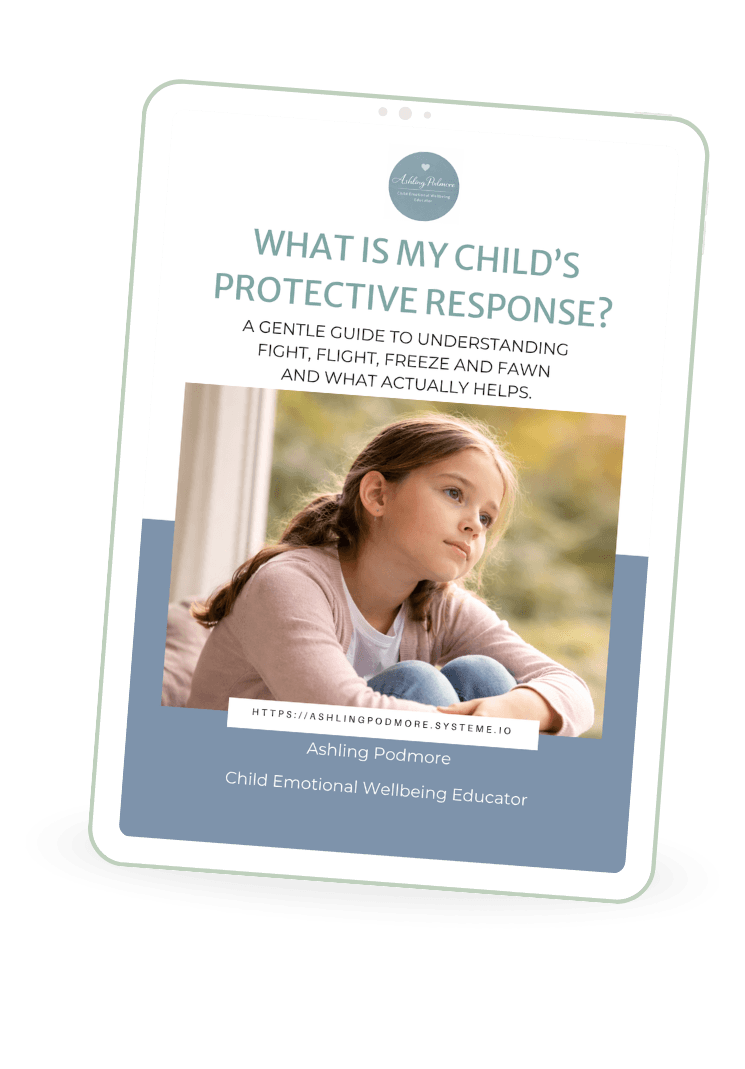
If you’d like to understand these patterns more clearly, I’ve created a free guide for parents that explains some of the most common coping behaviours children develop and what they may be trying to communicate.
Let us know what you think in the comments!
YOU MIGHT ALSO LIKE

About Ashling
.I help safe parents talk to their children about the other parent, calmly and without blame.
Lived experience, a degree in childhood and psychology, and children’s books used in domestic violence centres and court family rooms.
Not sure where to start? The Safe Parent Starter Kit, $27”
Why does my child act like this after contact?
Get my free guide and find out what their behaviour is really telling you.
No spam. Unsubscribe anytime.”
© 2026. All Rights Reserved