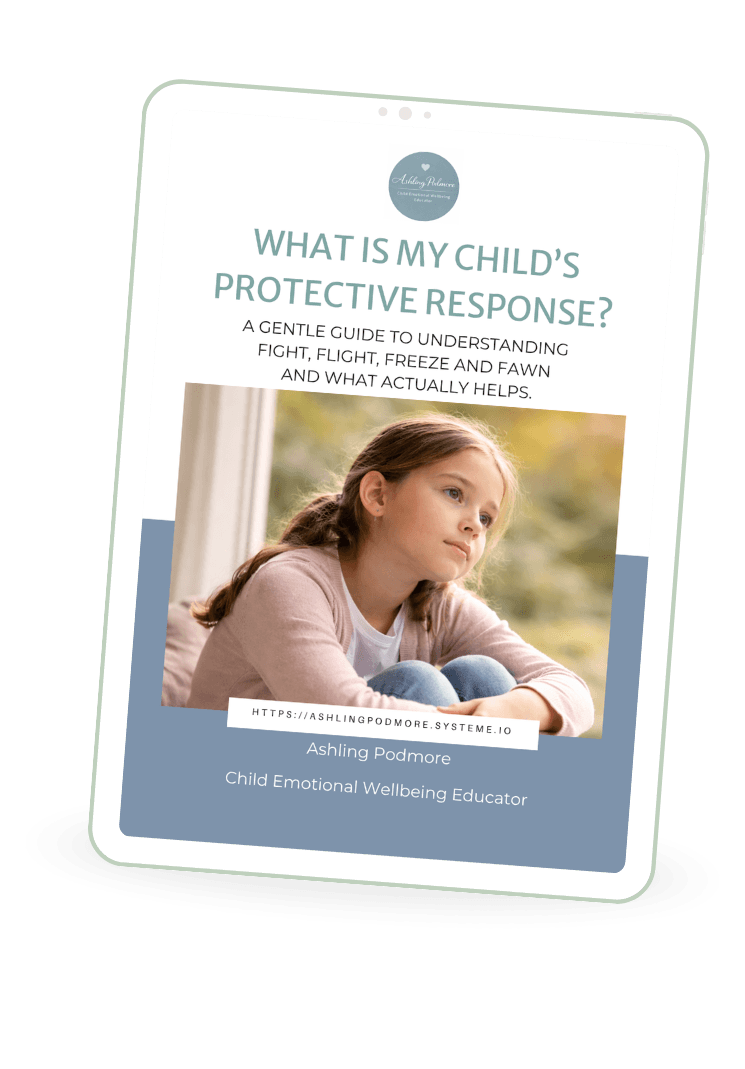
Free Parent Guide
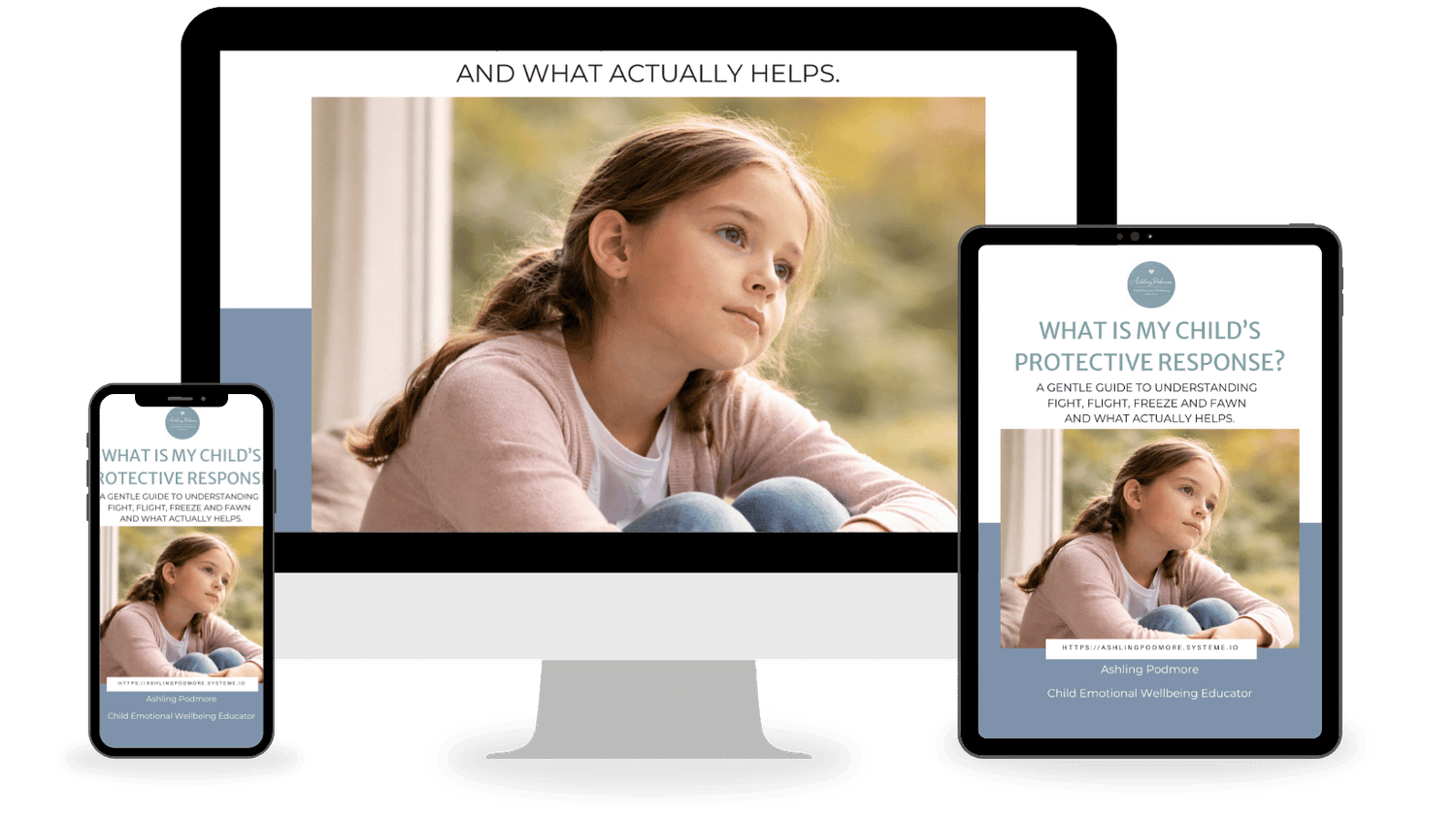
What Is My Child’s Protective Response?
A simple, calm guide to understanding
fight, flight, freeze and fawn.
Plus how to respond in ways that actually help.
When behaviour feels confusing, it’s often protective.
Children develop coping responses for many reasons: to cope at school, at home, during key life transitions, or simply while growing up.
Understanding what’s underneath changes how you respond.
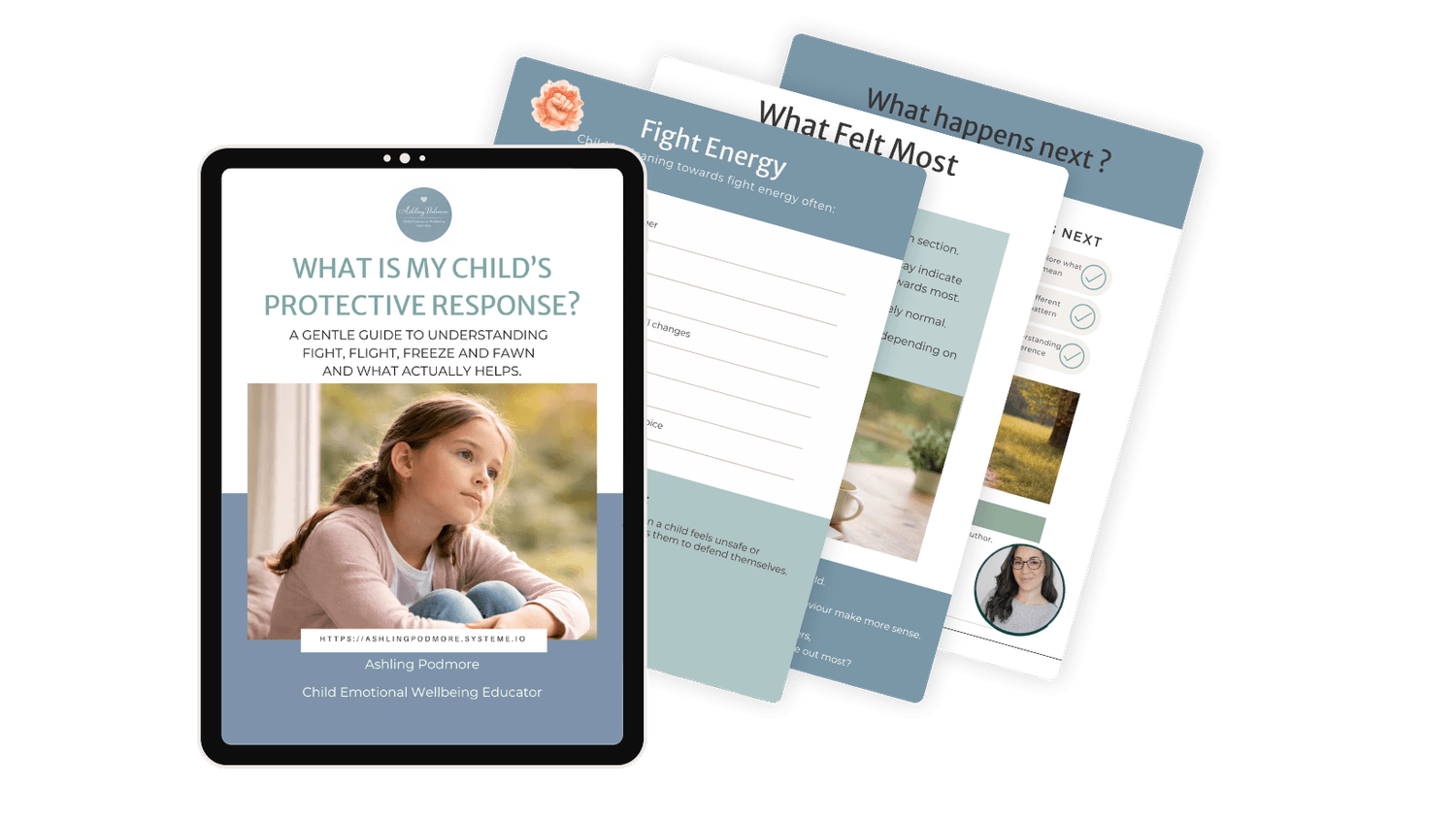
This Isn’t About Labels
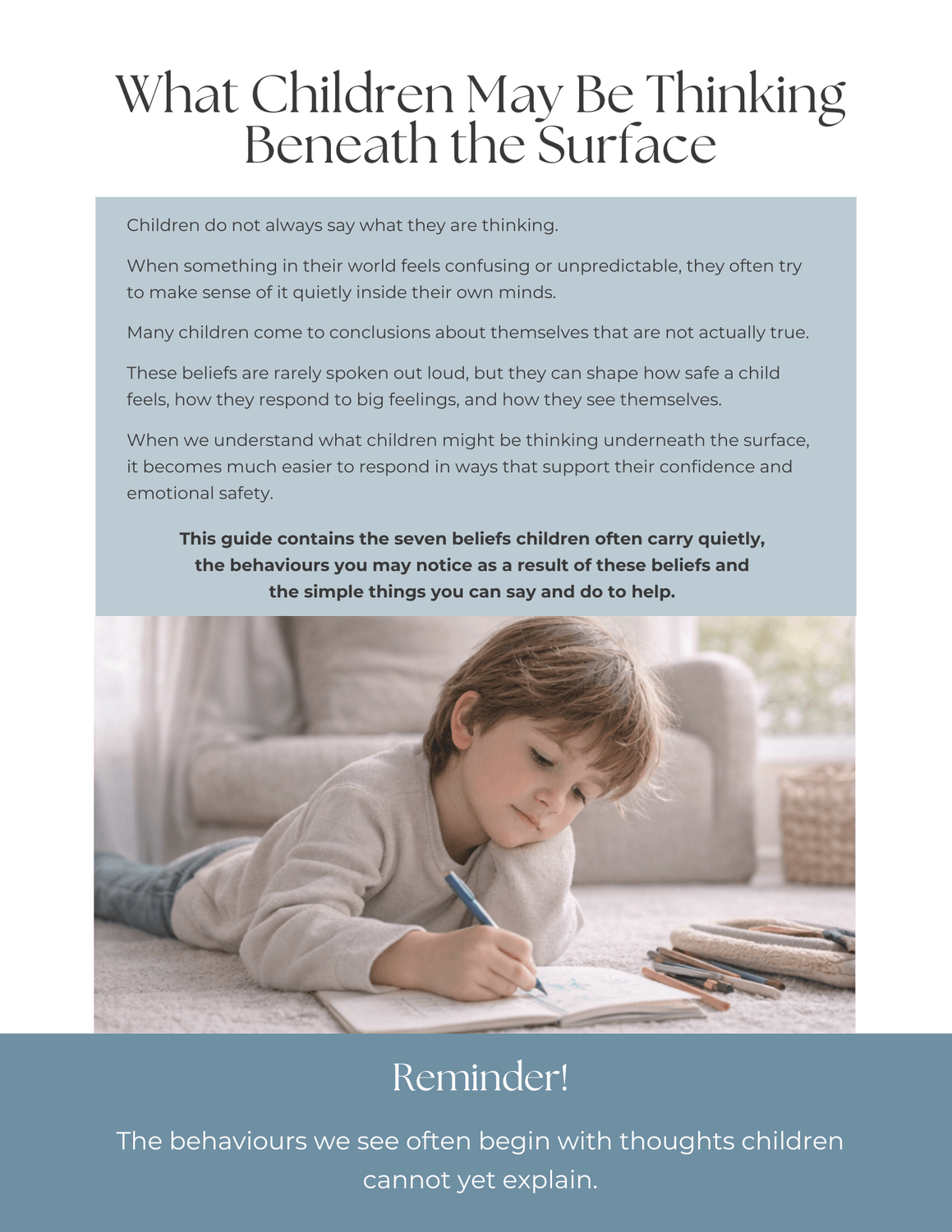
Inside this free guide you’ll discover:
• The 7 hidden beliefs children often develop when
adult behaviour feels unpredictable
• Why children sometimes blame themselves for adult emotions
• Simple language that helps children feel safe, understood, and reassured
• What your child actually needs to hear from you.
Who This Guide Is For
This guide may be helpful if your child:
• becomes very apologetic or tries to “fix” situations
• seems overly responsible for other people’s feelings
• asks repeatedly if everything is okay
• struggles with sudden meltdowns or big emotional reactions
• becomes unusually quiet about things that seem important
• seems anxious when adult moods change
Many parents notice these changes during times of family stress, separation, or emotional tension in the home.
Understanding what children may be thinking beneath the surface can change how we respond.
When Behaviour Makes Sense, Everything Changes
Instead of reacting to the surface behaviour, you’ll understand what your child’s nervous system is communicating.
That understanding changes your tone.
Your response changes.
And your child feels safer.
Small changes create long-term stability.
Created by
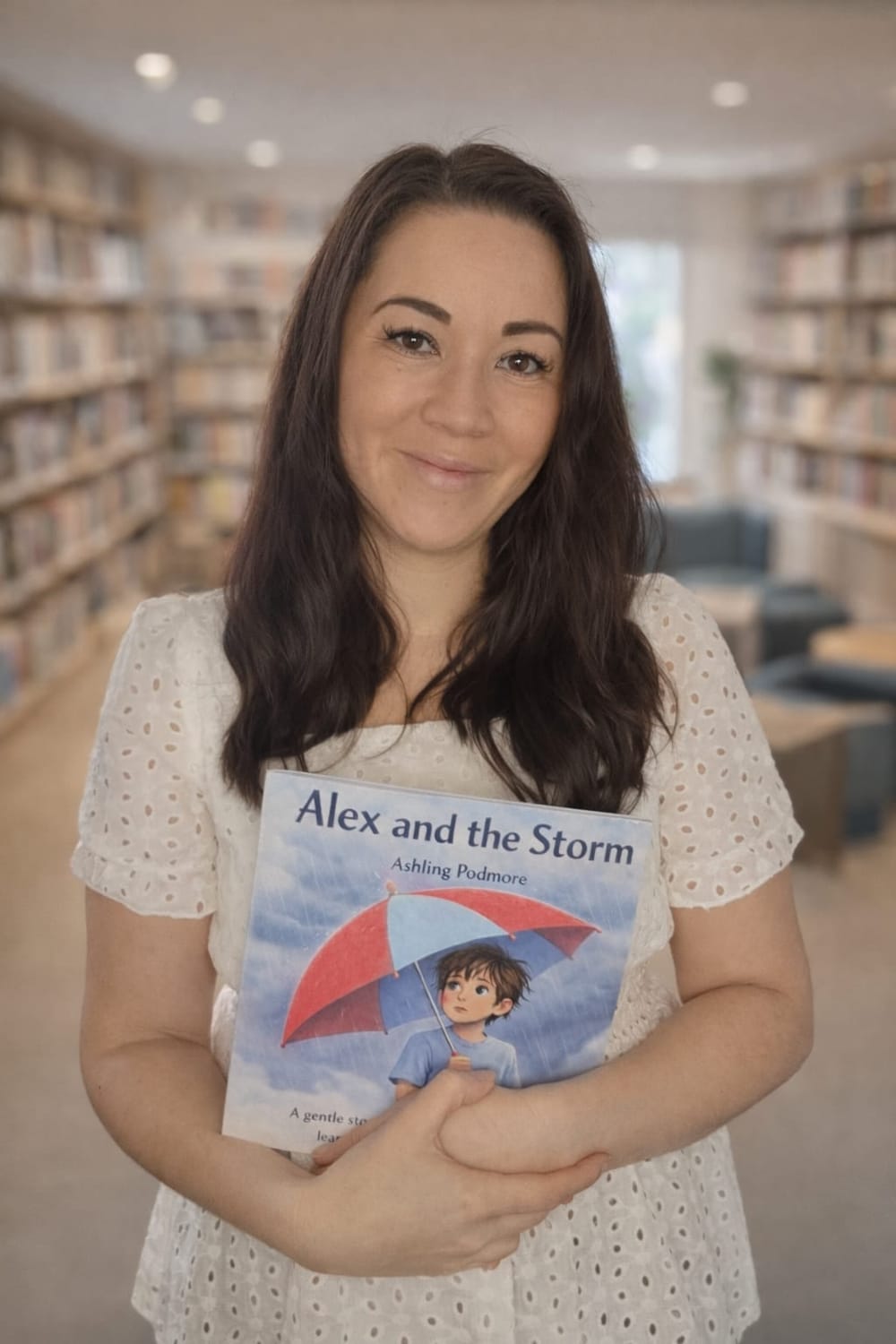
Ashling Podmore
Author and child wellbeing educator, Ashling writes story-based resources that help children understand big emotions in safe, age-appropriate ways.
Her work focuses on emotional safety, grounding, and helping families make sense of what sits beneath behaviour.
Enter your details below and receive your free Protective Response Checklist instantly.