
Understand your child's inner world
Alex and the Storm
A gentle story for children whose emotions build… and burst.
Newly released · First launch
Paperback £12.99 · UK shipping only · Delivered within 7 days

When the storm hits, it looks sudden.
The shouting.
The tears.
The slammed door.
The complete overwhelm.
But what if the storm didn’t start there?
What if it started much earlier...quietly...with the buzzing?
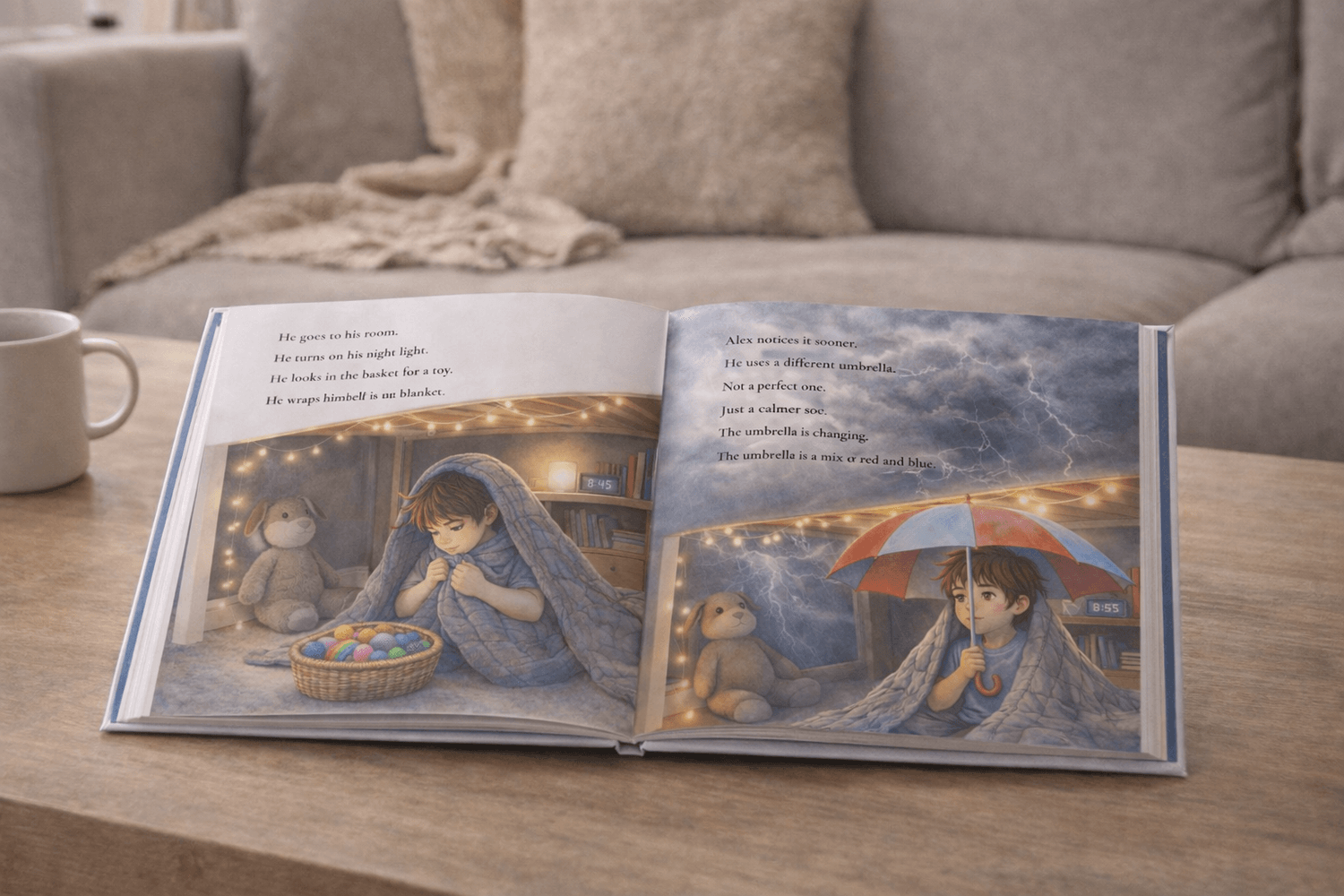
For the child who erupts…
And the parent trying to stay calm.

If your child:
Overreacts to small things
Melts down after school
Struggles to explain what’s happening inside
Is neurodivergent and finds regulation difficult
Feels angry, anxious or “too much”
Feels miserable or upset with themselves after the meltdown
Seems fine… until suddenly they’re not
You are not alone.
And they are not broken.
The Bees. The Storm. The Umbrella.
Alex and the Storm uses simple, child-friendly metaphors to explain emotional overwhelm in a way children understand.
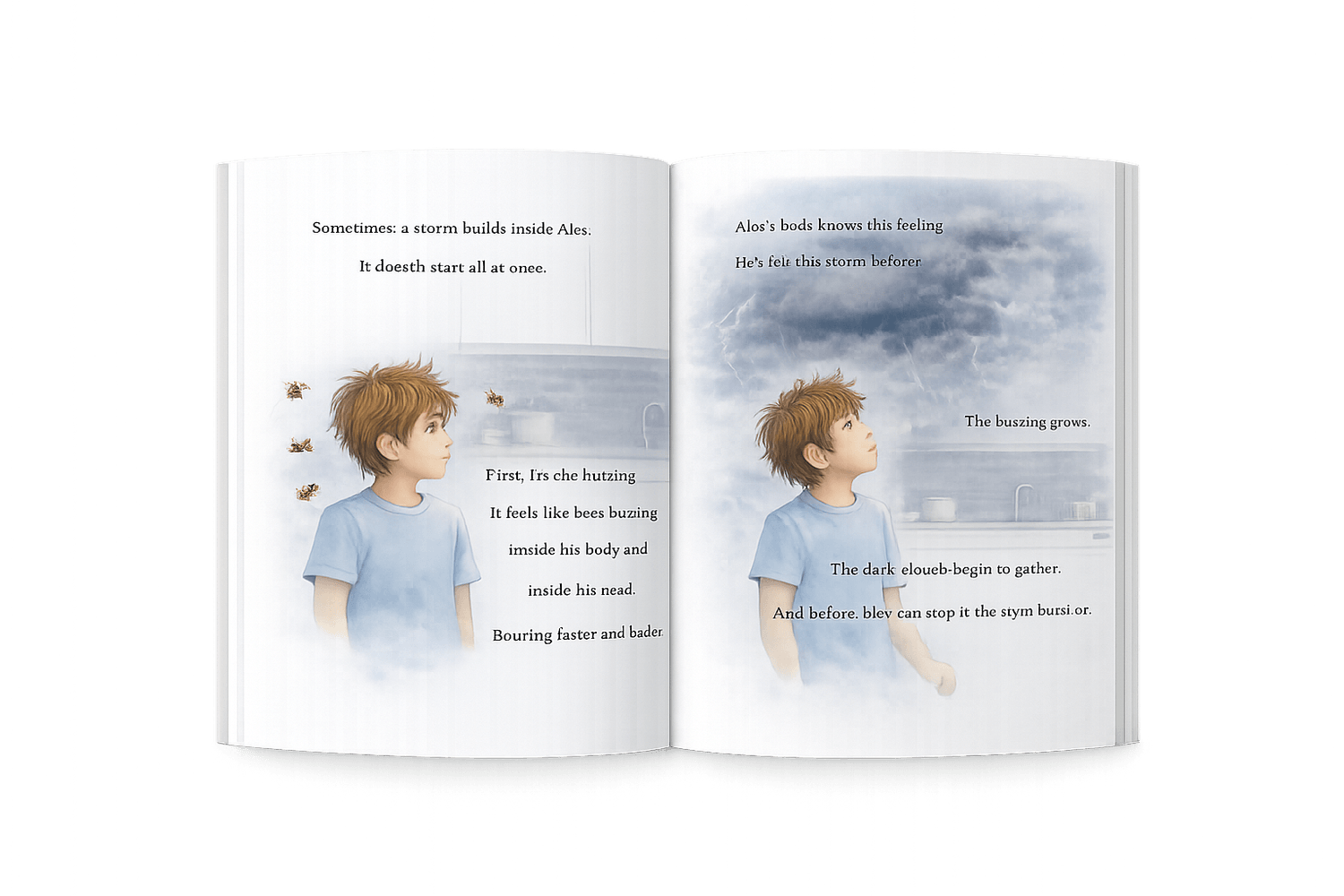
The bees represent the build-up...
the buzzing of anger, anxiety and internal panic.
The storm represents the eruption.
The umbrella represents safety and support.
Children naturally begin using the language:
“My bees are buzzing.”
“I feel stormy.”
“I need my umbrella.”
And suddenly… the conversation opens.
It's not forced.
They're not interrogated.
They're not being over analysed.
They feel understood.
Let me tell you
Why this book is different
Most emotion based books for children either:
Over-explain simple concepts
Introduce something too complicated
Add gimmicky characters
Or unintentionally shame the child
This book does none of that. Instead it is:
No blame
No shame
No fixing
No overwhelming plan
Just the right amount of directness
wrapped in the softness of story and metaphor.
It feels like their story.
But told safely through Alex.
So they can connect without feeling scrutinised.

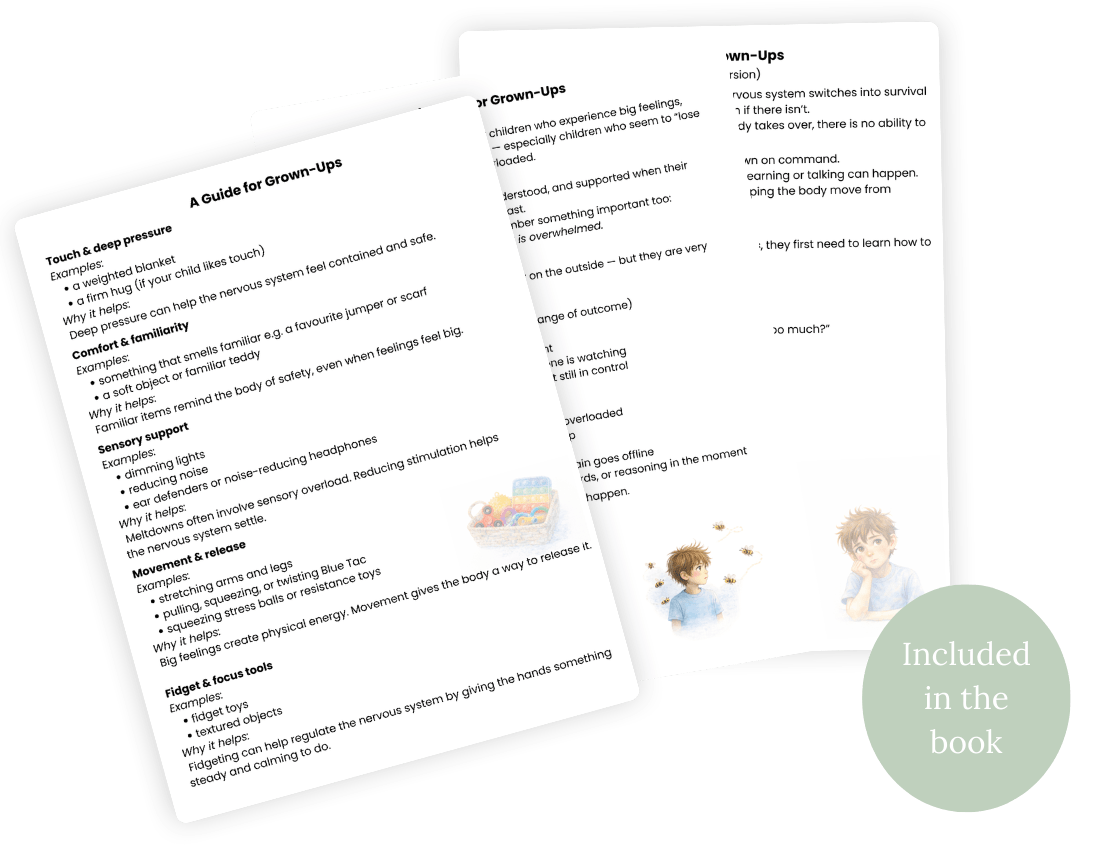
It’s More Than a Story
At the back of the book is a simple parent guide.
Not pages of theory.
Not a new parenting system.
Not complicated next steps.
Just:
What’s happening in the brain during a meltdown
(the simple version)
What not to do
What helps
How protective coping strategies develop.
How to respond calmly
You don’t need to implement something new.
You simply add this book to your home library.
Read it together, like you normally would.
And leave the conversation open.
The part you want to know
What Changes After Reading It?
Your child:
Feels seen
Understands their storm
Has language for their inner world
Knows they are not “bad” or “too much”
You:
Notice the bees before the storm
Understand the build-up
Take it less personally
Stay calmer in the moment
Now you both understand what’s happening inside.
And shared language changes everything.
Who This Book Is For?
Parents of children who erupt,
over react or meltdown
Children who struggle to regulate big emotions or overwhelm
Parents who want to connect with their child using calmer responses
If you’ve ever thought:
“I know there’s something happening underneath this… I just don’t know how to understand it.”
This book helps you understand it.

The story behind Alex
Why I Wrote This Book
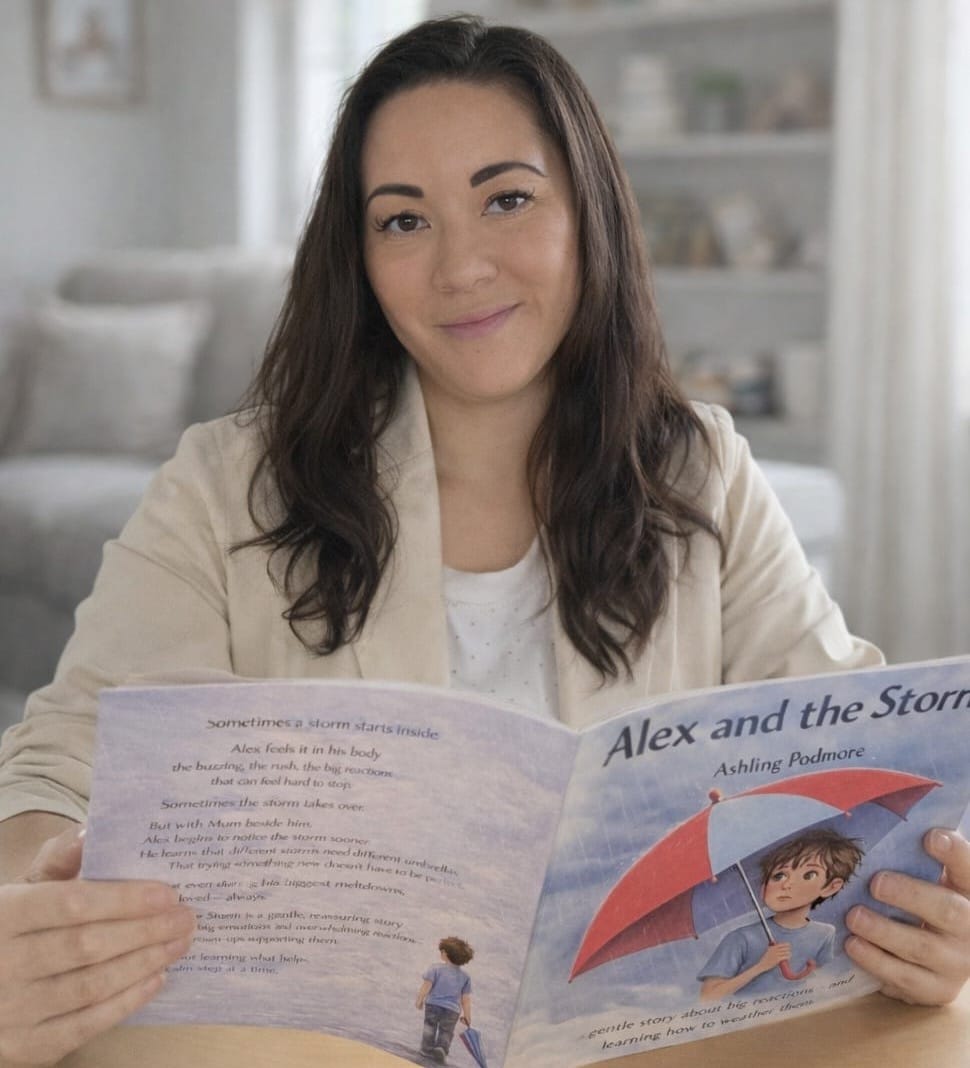
Hi, I'm Ashling, an author, emotional well being educator and parent.
I wrote Alex and the Storm after watching my own daughter struggle with emotional overwhelm.
When we started using simple language like “the bees”, “the storm”, and “the umbrella”, things began to change... she could finally explain what was happening inside.
Seeing that change made me realise other children needed this language too.
Alongside being a parent, I’ve spent over 16 years supporting children and families as a Parent Educator specialising in emotional wellbeing.
What started as a way to help my daughter understand her storms has now helped many other children make sense of their own..
Early reader feedback:
Simple but powerful
“This is one of the clearest explanations of emotional overwhelm I’ve seen for young children. The metaphors are simple and powerful."
SARAH T.
Language to use
“The first time we read it, my son stopped halfway through and said ‘my bees feel like that sometimes.’ It gave him words he’d never had before.”
MICHELLE L.
So much value
“The parent guide alone was worth it. I’ve spent so much time searching Google trying to understand my child’s meltdowns, but this explained it so clearly."
JESSICA P.
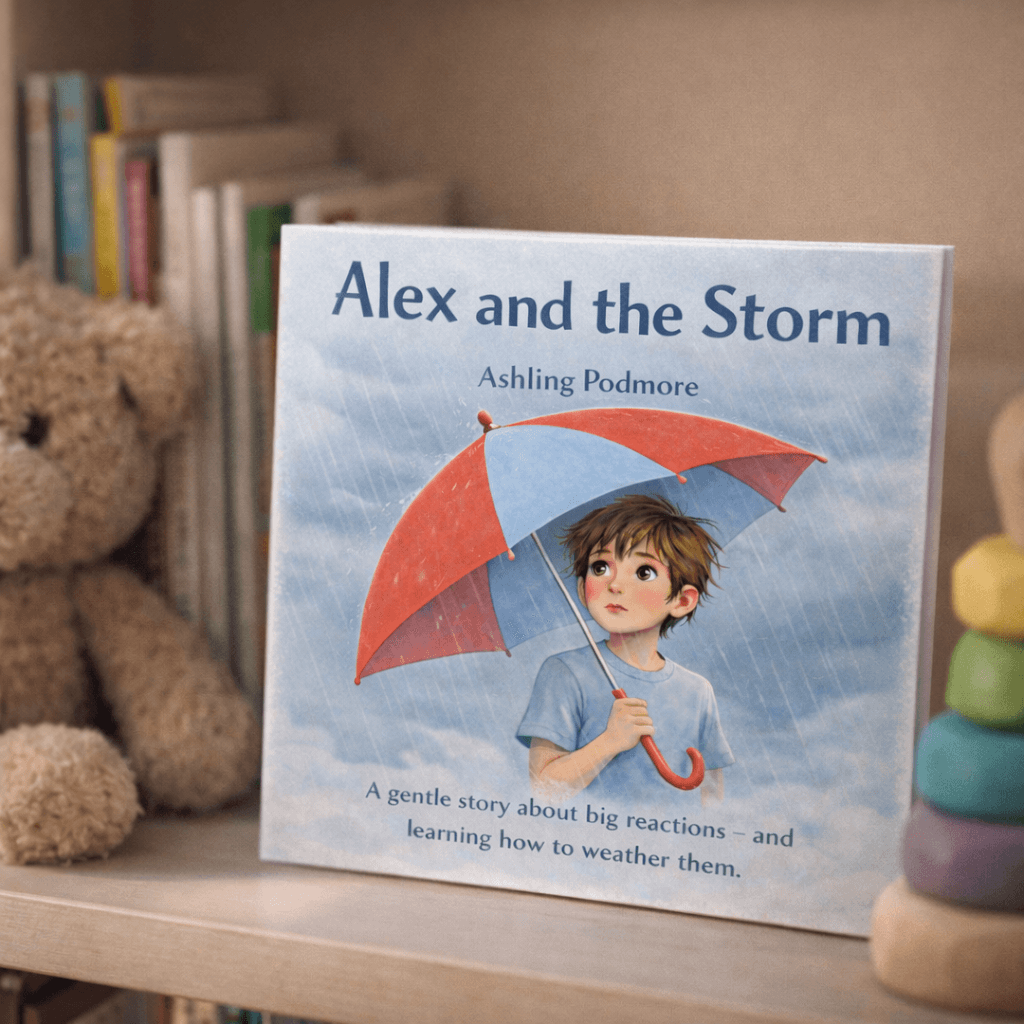
What parents are saying
Your Questions Answered
No.
Children are already experiencing these feelings in their bodies. When we give them simple language to understand what’s happening, it often makes the experience feel less scary and more predictable.
The story introduces these ideas gently, through Alex’s experience, so children can recognise their own feelings without feeling judged or overwhelmed.
Many families find that once feelings have a name, conversations actually become calmer and easier.
Not at all.
All children experience big emotions as their brains and nervous systems develop. Meltdowns are not a sign of bad parenting or a child being “difficult” — they are often a sign that a child’s body has become overwhelmed and doesn’t yet have the tools to regulate itself.
This book simply helps children understand what is happening inside their bodies when feelings build up, and gives families a shared language to talk about it.
Most parents are already doing many of the right things.
Sometimes children just need a little help making sense of their inside world.
Not at all.
You simply read the story together like you would any other bedtime or quiet-time book.
The parent guide at the back offers a few simple ideas, but they are designed to fit naturally into everyday moments rather than becoming something new you have to schedule or manage.
Most families use it just as they would any other story - reading it together and letting the conversations happen naturally.
No.
This book isn’t a system or a programme.
It simply helps children understand what is happening in their bodies when feelings become overwhelming, and gives parents a shared language to talk about it.
You can take whatever feels helpful and leave the rest.
The story is designed for children roughly ages 4–9.
Younger children connect with the pictures and metaphors, while older children often relate strongly to the explanations about what their body is feeling.
Many parents also say the language helps them talk about emotions with siblings of different ages.
Many books talk about emotions in general.
This story focuses specifically on what it feels like inside a child’s body when emotions become overwhelming.
It helps children recognise the early sensations that come before a meltdown - the buzzing, the heat, the build-up - so those feelings make more sense to them.
The simple parent guide at the back then shows how families can respond in ways that support regulation rather than escalation.
Not Ready to Purchase?
That’s completely okay.
If this resonates with you, if you’re navigating big emotions at home and want to understand what’s happening underneath - you’re welcome inside The Calm Parent Club.
It’s where I share:
Clear explanations of emotional overwhelm
How to respond calmly when storms build
What’s happening in the brain (simple version)
Protective coping strategies explained gently
Early access to new books and courses
© 2025. All Rights Reserved
Home | Terms & Conditions